Back to portfolio

Retail

Solution Blueprint

Representative solution design. Results depend on deployment.

AI Inventory & Demand Forecasting

A system that predicts how much of each product every store will sell, and tells your team what to order. Best-sellers stay on the shelf, and slow items stop piling up.

  • Every product

    Forecast for every store

    Each item gets its own sales forecast at each location, updated as new sales come in.

    By design, not a measured result
  • Order advice

    Ready before you reorder

    The system suggests how much to order, based on delivery times and how much backup stock you want.

    By design, not a measured result
  • Planners

    Approve every order

    Your team sees the suggestion and the reasons, then decides. Most of their time goes to the risky items.

    By design, not a measured result

Key details

A system that predicts demand for every product in every store and suggests what to order.

Challenge
Ordering relies on past averages and manual guesses, so some shelves run empty while other stock piles up.
Solution
Rolling sales forecasts, suggested order amounts and early warnings, all in one place for your planners.
Technologies & tools
A system that learns sales patterns from your own history, ordering rules your team sets, and simple dashboards linked to your existing systems. Full details are in the technical section below.

In short

Axiomra designed a system that predicts how much of each product every store will sell. It then suggests how much to reorder.

It also warns your team early about items likely to run out, or likely to sit unsold. That happens before it costs you sales or ties up cash.

A typical situation

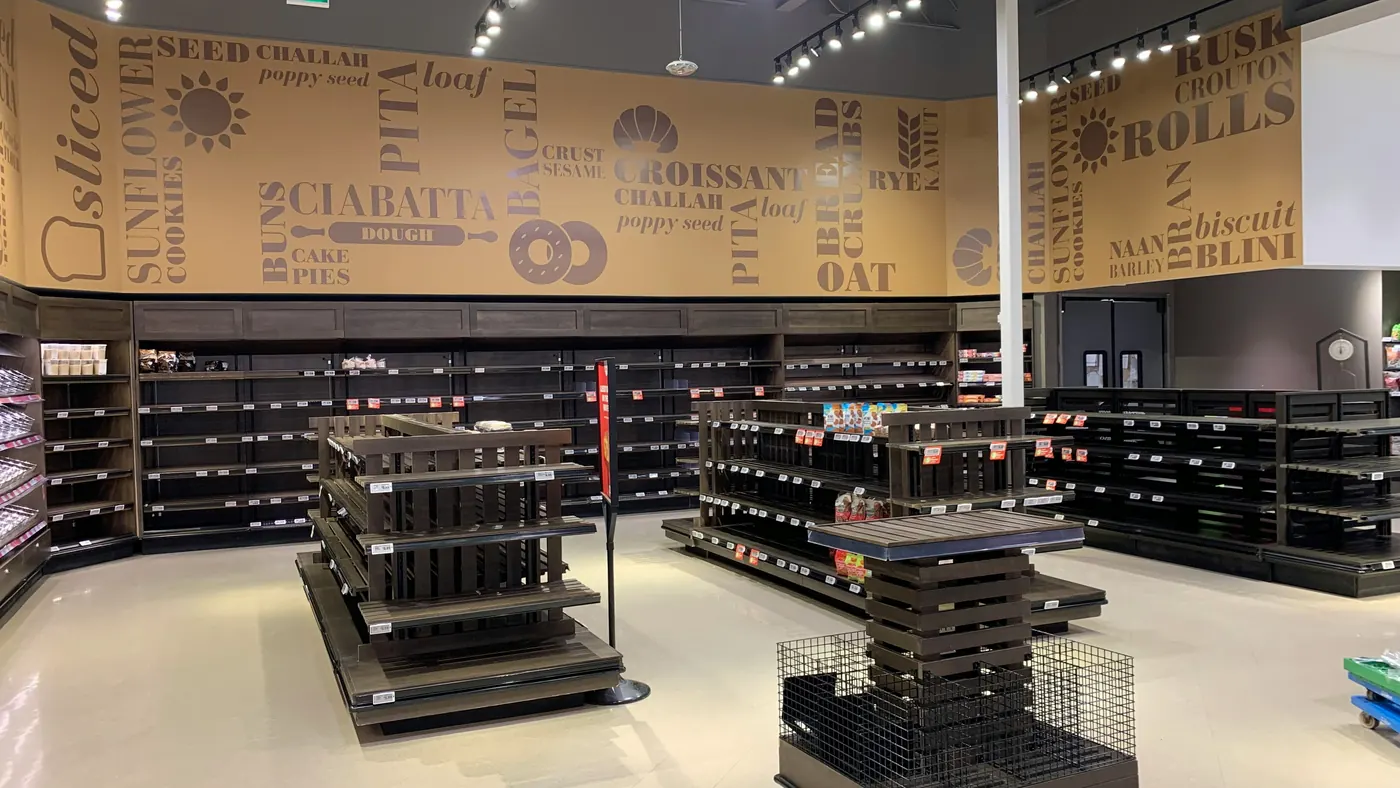
A retailer sells thousands of products across many stores. Demand changes with the seasons, and stock is often in the wrong place.

Popular items run out, while slower ones fill the back room.

A bakery section of a grocery store with rows of empty shelves
Photo: Richard Burlton / Unsplash

The problem

  • Ordering is mostly guesswork. Orders depend on past averages and manual changes by planners.
  • Wrong stock in the wrong place. Fast sellers run out, while slow products take up space and money.
  • Too many things affect sales. Promotions, holidays, weather, local events and a product's age are hard to plan for the same way every time.
  • Reports don't tell you what to do. The business needs clear advice it can act on, not static reports.

What we built

  • We bring your sales, stock, promotions, prices, calendar, store and supplier information together in one place. Outside factors like weather and local events are added too.
  • The system predicts sales for every product in every store, and keeps updating those predictions. It also shows how sure it is about each one.
  • It then suggests how much to order. It takes into account delivery times, backup stock, how often you want items in stock and minimum order sizes.
  • Simple dashboards show your planners the products and stores most at risk, so they can act on those first.

How it works, step by step

  1. 1

    Your data comes in

    Sales, stock, promotions and supplier information are collected from your existing systems.

  2. 2

    Sales patterns are picked out

    The system finds the seasons, busy days and other patterns that shape what people buy.

  3. 3

    Sales are predicted

    Each product gets a sales forecast for each store.

  4. 4

    An order is suggested

    The system works out when to reorder and how much.

  5. 5

    Human checkpoint

    Risks are flagged for your team

    Items likely to run out or pile up are shown first. Planners review them and approve or change the order.

  6. 6

    Results are tracked

    The system checks how close its predictions were and records planner changes, so it keeps improving.

What changes for your team

What this setup is designed to change:

  • Fewer empty shelves on your best-selling products.
  • Less extra stock sitting unsold, so more of your cash stays free.
  • Ordering decisions made the same way across every store.
  • Planners focus on the items that need attention, not every product.

How we keep it safe and reliable

  • People stay in charge

    Staff make the final call on high-impact or unclear decisions, and whenever the system is unsure.

  • Security built in from day one

    Only the right people can see data, every action is recorded, and privacy is planned in from the start, not added after launch.

  • Judged on real results

    We measure how accurate the forecasts are and how well ordering runs. The goal is a better-run business, not just a smarter system.

  • Watched after launch

    Once live, the system is monitored and feedback is collected. Careful updates keep it accurate as shopping habits change.

Why Axiomra

Axiomra brings together AI, data, systems integration and ongoing oversight. That turns this idea into a working tool that fits your existing systems and the way your team decides what to order.

TagsRetailPredictive AnalyticsDemand ForecastingStock PlanningPlanner Review
Under the hood (for technical teams)

Tools & technology

Technology stack by layer
LayerTechnology / Approach
ForecastingLightGBM, XGBoost and time-series models
Data engineeringPython, SQL, cloud data warehouse
OptimizationReorder-point and safety-stock logic
BILooker, Power BI or Tableau
MLOpsForecast monitoring and retraining

More case studies

Want the right stock on the right shelf?

Tell us how your team decides what to order today and where your sales data lives. We will show what a forecast could flag, and where your planners stay in charge.

Talk to our team