



Agentic AI Development Company

Agentic AI Developmentfor Connected Business Workflows

Axiomra builds AI agents that plan tasks, use approved tools, and coordinate multi-step workflows. We define permissions, human approval points, and activity logging so your team can delegate routine work with appropriate oversight.

4.9 from 500+ companiesReviewed on Clutch
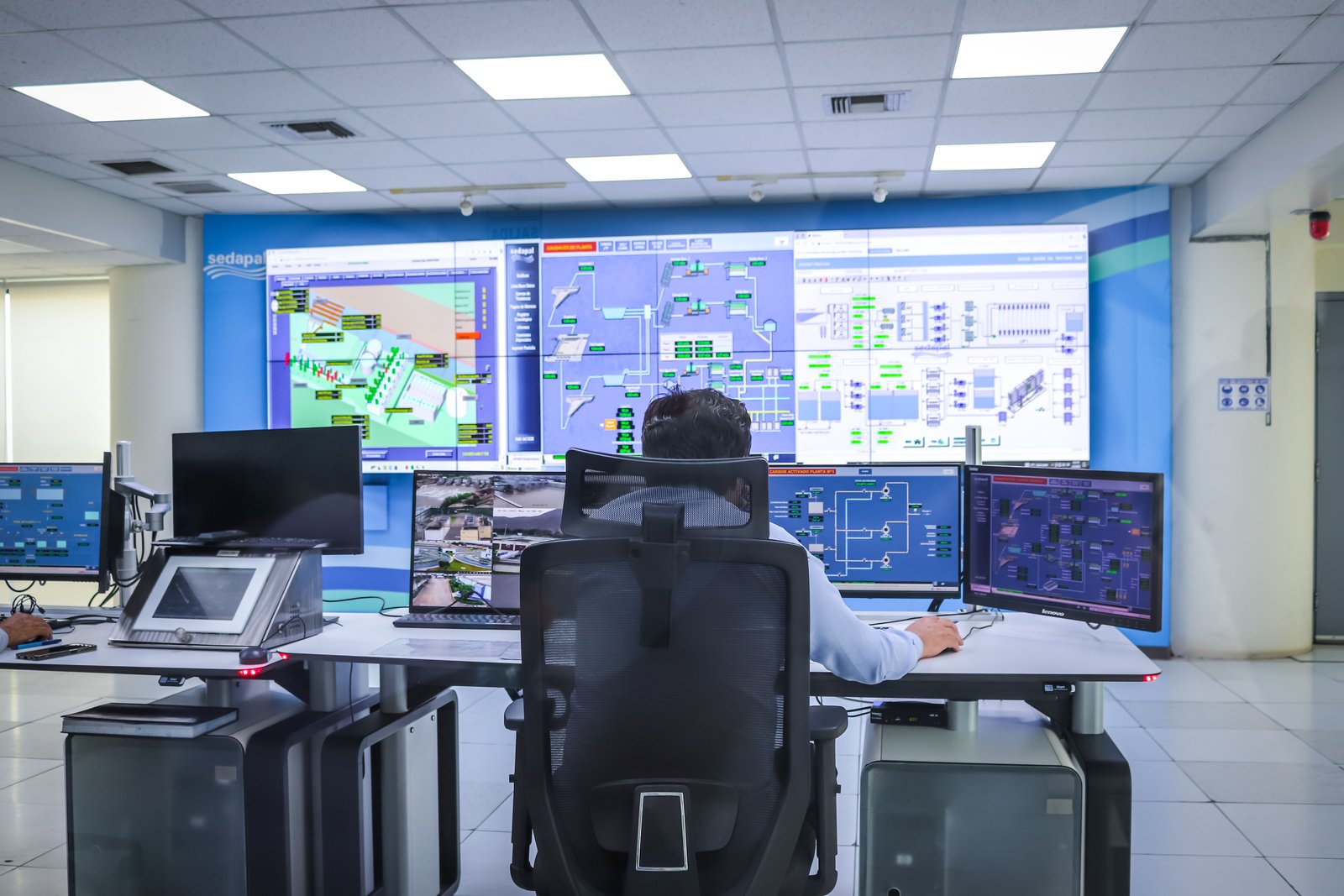
Operator watching an autonomous agent run a live process across a control-room dashboard wall
Autonomous execution
Hand holding a wireframe head wired into a graph of delegated agent tasks
Multi-agent delegation
Hands typing a prompt into an agent interface open on a laptop
Grounded conversation
Less manual workload
60%Less manual workload
Agents on shift
24/7Agents on shift
Weeks to production
6-10Weeks to production

Frameworks & runtimes

LangGraphCrewAIAutoGenLangChainOpenAI Agents SDKClaude Agent SDKModel Context ProtocolTemporalSemantic KernelLlamaIndexPydantic AIRay ServeLangGraphCrewAIAutoGenLangChainOpenAI Agents SDKClaude Agent SDKModel Context ProtocolTemporalSemantic KernelLlamaIndexPydantic AIRay Serve

Where the manual work actually costs you

Your Workflows Are Not Slow Because Your People Are

They are slow because every multi-step process still needs a human to open the next tab. Copy from the CRM, check the policy, wait for an approval, paste into the ERP. RPA scripts break the moment a field moves. Agentic AI removes the handoffs, not the people.

Leadership team reviewing a stalled process together in a boardroom
  1. 01

    Work stalls between systems, not inside them

    Your CRM, ERP, ticketing, and finance tools all work. The cost is the human glue between them. The lookups, re-keying, and status chasing that nobody has ever measured but everyone does daily.

  2. 02

    Rule-based automation breaks on the first exception

    RPA bots follow a recorded path. Change a field, add a supplier, get an unusual invoice, and the bot fails silently, so a person ends up reviewing the bot as well as doing the work.

  3. 03

    Chatbots answer questions but cannot finish jobs

    A support bot that can explain your refund policy but cannot issue the refund just moved the ticket, it did not close it. Deflection rates look good; queue length does not move.

  4. 04

    Nobody will approve AI they cannot audit

    The blocker on most agent projects is not accuracy, it is accountability. Without permissions, logs, and a human checkpoint on high-stakes steps, security and legal will stop the rollout.

What we build for you

End-To-End Agentic AI Development For Teams That Need It Working, Not Demoed

We do not ship agent demos. We ship agents that run in production, integrate with your existing stack, and carry a number you can defend to a CFO. Whether you need one autonomous agent or a full multi-agent system, these are the layers we cover.

08 delivery layers

Developer building agent integrations across a dual-monitor workstationLayer 01

Agent Development & Integration

We design and build custom agents around your actual workflows, tools, and data, not a template. From a single-task agent that clears one queue to a reasoning system that handles a whole process, each one is wired into your APIs, databases, and enterprise platforms so it is doing real work from the first week.

  • Workflow decomposition into agent-sized tasks
  • Tool and function-calling layer over your APIs
  • Memory, state, and long-running task handling
  • Native connectors for CRM, ERP, ticketing, and data warehouse
Inside one agent cycle

Perceive, Reason, Act, Learn Then Round Again Until The Job Is Done

An agent is not one call to a model. It is a loop: it reads the situation, decides the next move and writes down why, executes against your real systems, then measures what actually happened and carries that forward. Follow one supplier invoice through all four stages.

Worked example: a supplier invoice that does not match its purchase order

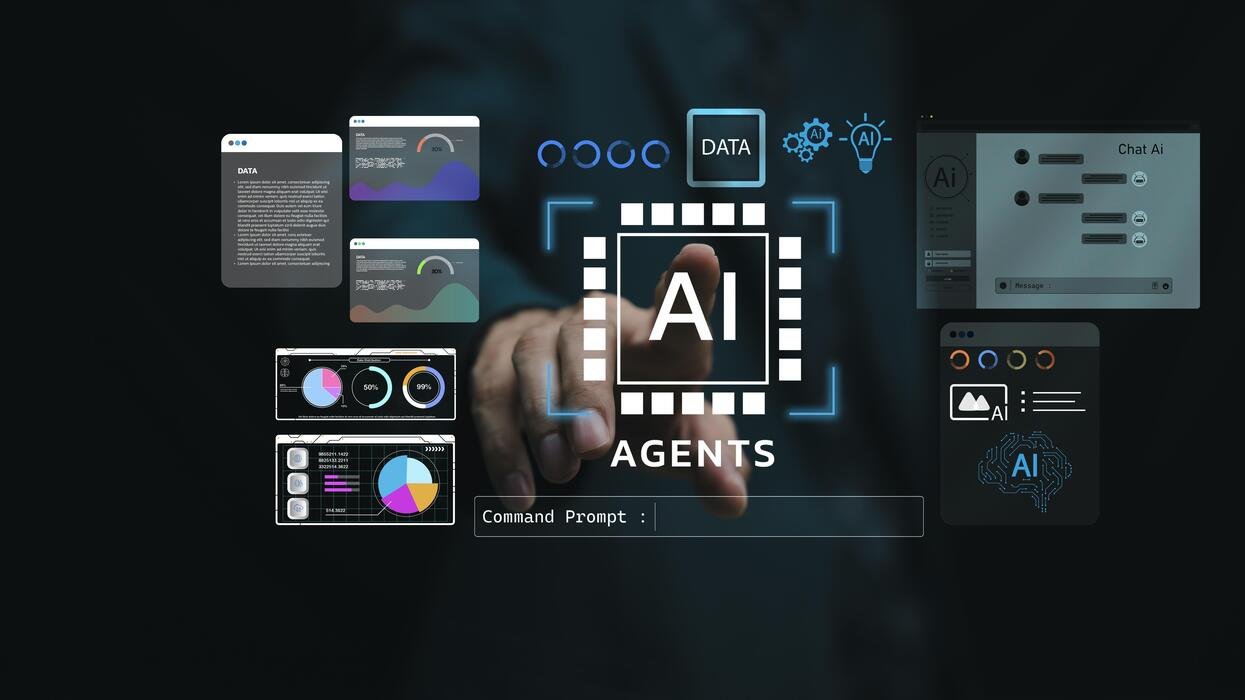
Agent console surrounded by the dashboards, chat panel, and command prompt it drives on each pass of the loop
One loop, four stages, every pass logged

PerceiveRead the whole situation

The agent takes in the trigger and everything around it: the inbound document, the matching records in your systems, the contract it sits under, and how similar cases went before. Structured rows and unstructured PDFs both, retrieved with the source kept attached.

  • Event, webhook, schedule, or document triggers
  • Structured records and unstructured files together
  • Context retrieved through RAG, with citations kept
agent trace
› invoice.received   vendor=NORTHWIND  total=48,210› retrieve           po_44192 · contract_v3 · 6mo exceptions

The loop exits on one of two conditions: the goal is met, or the agent hits a boundary you defined and escalates to a named human with its full reasoning attached. It does not guess its way past a wall.

Types of agents we build

The Right Agent Architecture For Every Business Problem

Not all agents work the same way, and picking the wrong class is the most expensive mistake on an agent project. We build all six, so the architecture follows the problem instead of whatever framework was trending that quarter.

Reactive Agents

Reactive agents are built for speed. They read an incoming condition, match it against defined rules, and act immediately, no memory, no planning, just fast and accurate execution. A support triage agent that reads every inbound ticket, detects urgency and topic, and routes it to the right team in under a second is a reactive agent.

Best for

High-volume routing, triage, classification, and alerting

  • Sub-second
  • Stateless
  • High throughput

How agentic AI actually works

The Architecture Behind Agents That Get Work Finished

Most AI tools answer questions. Agentic systems take action. The difference is architecture: how an agent thinks, decides, and executes without waiting for a human to direct every step. Every agent Axiomra builds runs on a reason-act cycle rather than a single generation.

  1. Reason

    Reads the task, breaks it into steps, and decides what to do next.

  2. Act

    Calls a tool, queries a database, or triggers an API in your stack.

  3. Observe

    Reads the real result and checks it against the goal it was given.

  4. Repeat

    Not done? Reason again with what it just learned and take the next action.

In one of our deployments this loop collects data from six systems, validates its own assumptions, and produces a structured report in under fifteen minutes, work that took an analyst four to six hours.

Built for what enterprise agents actually need

Agents that handle complex work, connect to real systems, stay inside their permissions, and improve over time. Here is what ships as standard.

Tool and API callingAgents that connect to your CRM, ERP, databases, and third-party tools
Human-in-the-loop controlsManual review checkpoints built into high-stakes steps of the workflow
Role-based access controlAgents reach only the data and actions they are explicitly authorised for
Audit trails and loggingA full, replayable record of every agent decision, tool call, and outcome
Cloud, on-premise, and hybridDeployed into whatever environment your security posture requires
Evaluation and regression suitesEvery change measured against a fixed test set before it reaches production

Identify Your First AI Agent Use Case

Share a process your team wants to improve. We will assess its suitability for an AI agent, discuss the required controls, and estimate the effort and running costs.

Book a Free Agentic AI Consultation

Real work, real numbers

Agentic AI Systems We Have Shipped For Real Businesses

These are not concept projects. Each one is a production system solving a named business problem, integrated with live data, and reporting a measurable outcome. This is what our agentic AI development services look like in practice.

Support agent working a live queue beside the AI agent that resolves tickets end to end
Tickets resolved without a human
68%Tickets resolved without a human
Average handling time, down from 19
4 minAverage handling time, down from 19
Unauthorised billing actions
0Unauthorised billing actions

01: Customer operations

Support Agent For A Subscription Platform

The problem

A subscription business was answering the same forty questions forever, and its chatbot could explain policy but never execute it. Every refund, plan change, and address update still landed in a human queue.

What we built

We built a conversational agent grounded in their help centre and billing docs, wired to their billing API with scoped permissions. It resolves routine requests itself, executes the change, and escalates anything outside its boundary with the full context attached.

Talk about a system like this
Advisors reviewing an agent-generated exception report in front of a live market board
Invoices straight-through processed
83%Invoices straight-through processed
Faster month-end close
3 daysFaster month-end close
Exception error rate
1.4%Exception error rate

02: Finance operations

Invoice And Exception Agent For A Distributor

The problem

Three-way matching between invoices, purchase orders, and receipts was manual. Exceptions piled up at month end, and the team was closing four days late every single quarter.

What we built

A deliberative agent extracts invoice data, matches it against POs and goods receipts, routes clean items straight through, and prepares a ranked exception queue with its reasoning attached for anything that fails. Approvals above a threshold still require a human.

Talk about a system like this
Warehouse operator checking stock the agents track across suppliers and shipping lanes
Fewer stockout incidents
41%Fewer stockout incidents
Earlier disruption detection
12hEarlier disruption detection
Weeks to first production agent
6Weeks to first production agent

03: Supply chain

Multi-Agent Replenishment For A Retail Group

The problem

Stockouts were being noticed after they happened. Buyers watched dashboards, suppliers were compared by hand, and a delayed shipment surfaced days late.

What we built

Three specialised agents (demand, supplier, and logistics) share context under a supervisor. They detect shortage risk early, weigh alternative suppliers on cost and lead time, and prepare reorder recommendations for a buyer to approve in one click.

Talk about a system like this

Real problems, real results

How Businesses Are Using Agentic AI To Get More Done

Agentic AI is not a future concept. Teams across industries already run autonomous agents to cut cost, speed up operations, and absorb work that used to need a whole desk. Here is what that looks like in practice.

01

Customer support automation

Agents read the incoming message, understand the issue, pull the customer's record from your CRM, and either resolve it or route it to the right person with context attached: in seconds, not after a queue.

  • Resolution, not just deflection
  • Context-complete escalations
  • 3x query volume at the same headcount
02

Sales pipeline management

Agents watch your CRM, track deal stages, send follow-ups at the right moment, keep records updated, and flag deals going cold before a manager notices, so reps spend their time closing instead of on admin.

  • Automatic CRM hygiene
  • Timed, context-aware follow-ups
  • Early warning on at-risk deals
03

Finance and invoice processing

Agents extract data from inbound invoices, match against purchase orders, flag discrepancies, route approvals to the right stakeholder, and post to your accounting system, days of work compressed into hours.

  • Three-way matching, automated
  • Ranked exception queue with reasoning
  • Threshold-based human approval
04

HR and recruitment automation

Agents screen inbound applications against your criteria, run first-round screening questions, schedule interviews across calendars, and keep every candidate updated, so HR spends its time on final-stage judgement.

  • Criteria-scored shortlists
  • Calendar-aware scheduling
  • Up to 50% shorter time-to-hire
05

Supply chain and inventory

Agents monitor stock levels, track supplier performance, detect shortage risk before it lands, and trigger reorder workflows, evaluating alternative suppliers on cost and lead time when a disruption hits.

  • Predictive shortage detection
  • Supplier comparison on live data
  • Reorder drafted, human approved
06

Marketing campaign execution

Agents build audience segments, generate on-brand copy variants, launch across channels, watch performance in real time, and move budget toward what is working, so marketers work on strategy, not campaign setup.

  • Segment and variant generation
  • Cross-channel launch and monitoring
  • Automatic budget reallocation

Industries we serve

Agentic AI Solutions Built Around Your Industry's Rules

We build agent systems for businesses across industries. Each one is designed around the specific workflows, data, and constraints of that sector, because a healthcare agent and a retail agent fail in completely different ways.

Freight yard seen from above, one of the many industries running agents in production

Same architecture, different rules, and the rules are where agent projects fail.

Healthcare

Autonomous agents that reduce administrative load and support clinical teams with faster, better-evidenced decisions, without ever taking a clinical action unsupervised.

  • Clinical documentation and EHR data processing
  • Appointment scheduling and follow-up management
  • Prior authorisation and claims processing
  • Patient risk stratification with clinician sign-off
  • Remote monitoring and real-time alert triage

Finance and fintech

Agents that handle the reconciliation, review, and reporting load in regulated finance operations, with every action logged and every threshold enforced.

  • Invoice matching and exception handling
  • KYC and onboarding document review
  • Transaction monitoring with analyst escalation
  • Regulatory reporting preparation
  • Portfolio and covenant monitoring

Retail and e-commerce

Agents across the full commerce loop, from what a customer asks before buying to what happens in the warehouse afterwards.

  • Pre-purchase product and fitment assistants
  • Order, return, and refund execution
  • Dynamic pricing and promotion monitoring
  • Inventory replenishment recommendations
  • Catalogue enrichment and deduplication

Logistics and supply chain

Multi-agent systems that watch the network continuously and act on disruption before it reaches a customer.

  • Shortage and delay prediction
  • Supplier evaluation on cost and lead time
  • Route and carrier selection
  • Shipment exception handling
  • Automated customs and document preparation

Insurance

Agents that compress the paperwork half of insurance while leaving the judgement half with your underwriters and adjusters.

  • First notice of loss intake and triage
  • Claims document extraction and validation
  • Fraud signal detection with human review
  • Policy servicing and endorsement handling
  • Renewal and retention outreach

Professional and legal services

Agents that handle the research, extraction, and drafting layer so billable hours go to the work only a professional can do.

  • Contract review and clause extraction
  • Matter intake and conflict checking
  • Research summarisation with citations
  • Deadline and obligation tracking
  • Document assembly from precedent

Controls agreed before deployment

Security, Access, And Control Agreed Before Any Agent Goes Live

Agents that connect to your systems, handle business data, and take actions need clear boundaries. The controls below are defined with your team during design and confirmed before the agent goes live.

Access controls

Every agent is scoped to only the data and systems it needs. Role-based permissions are defined before deployment, so an agent cannot read, modify, or share anything outside its boundary, even if it is asked to.

Data handling

Data handling for each agent is agreed with your team before deployment: where data is stored, how it moves between systems, how long it is retained, and the terms covering model training. Encryption and access scope are confirmed in writing as part of the engagement.

Human oversight

For high-stakes decisions we build manual review checkpoints directly into the agent workflow. The agent does the work; a human approves the outcome before any irreversible action is taken.

Fallback behaviour

When an agent hits a situation it was not designed for, it does not guess and it does not fail silently. Fallback logic stops the workflow, flags the case, and routes it to the right person with the trace attached.

Model risk reduction

Every agent is tested against edge cases, adversarial inputs, and failure scenarios before go-live. Prompt injection defence, tool-call validation, and output checking ship as standard, not as an upgrade.

Requirements-aware design

For regulated sectors such as healthcare, finance, and insurance, the applicable requirements are reviewed with your compliance team at the design stage, and the agent architecture is built around what they confirm.

AI Agents Designed for Oversight and Control

Define what your agents can access, which actions require approval, and how activity is recorded. We work with your security team to assess the architecture against your review requirements.

Talk to an AI Agent Engineer

Our technology stack

The Technology Behind Our Agentic AI Development Services

We build agent systems on proven, production-grade tooling. Every choice in this stack is made for reliability, observability, and how well it fits the agent architecture, not for how new it is.

Agent runtime running on rack infrastructure inside a monitored data centre

Agent frameworks

  • LangGraph
  • CrewAI
  • AutoGen
  • OpenAI Agents SDK
  • Claude Agent SDK
  • Semantic Kernel

Reasoning models

  • Claude Opus
  • Claude Sonnet
  • GPT-4o
  • Gemini Pro
  • Llama 3
  • Mistral Large

Tooling and protocols

  • Model Context Protocol
  • OpenAPI
  • gRPC
  • Webhooks
  • Zapier
  • n8n

Retrieval and memory

  • pgvector
  • Pinecone
  • Weaviate
  • Qdrant
  • Redis
  • LlamaIndex

Orchestration and durability

  • Temporal
  • Celery
  • Airflow
  • Ray Serve
  • Kafka
  • RabbitMQ

Observability and evals

  • LangSmith
  • Langfuse
  • OpenTelemetry
  • Prometheus
  • Grafana
  • Promptfoo

Runtime and infrastructure

  • Kubernetes
  • Docker
  • AWS
  • Azure
  • GCP
  • Terraform

Security and governance

  • Vault
  • OPA
  • Keycloak
  • Presidio
  • Guardrails
  • Audit logging

Model choice is a cost decision as much as a quality one. We benchmark the reasoning step on your own tasks first, then run the smallest model that clears the bar.

How we build agentic AI systems

Our Agentic AI Development Process, Start To Handover

We follow a structured process built to reduce risk, keep you informed, and make sure the finished system fits how your business actually runs. Every stage has an exit you can take if the numbers stop making sense.

  1. Step 01

    Discovery and process audit

    We map the workflow as it is really performed (including the shortcuts nobody documented) and score each step by volume, cost, and risk to find where an agent earns its keep.

  2. Step 02

    Use case scoping

    We define exactly what the agent must do, what success looks like, and where its boundaries are. Success metrics are agreed here, before a line of code, so performance is never argued about later.

  3. Step 03

    Agent architecture design

    We choose the agent class, the topology, the tools it may call, and the model behind each step, then write it down as an architecture your engineers can challenge.

  4. Step 04

    Data and tool integration

    We connect the agent to your systems through scoped, typed interfaces, with retrieval pipelines built and evaluated against real queries from your business.

  5. Step 05

    Guardrails and evaluation harness

    Permissions, approval gates, fallback paths, and a fixed evaluation set go in before the pilot, so every later change can be measured instead of eyeballed.

  6. Step 06

    Pilot in a live environment

    The agent runs beside your existing process on real traffic. You see its decisions, its costs, and its error cases with nothing at stake operationally.

  7. Step 07

    Production rollout

    Staged cutover with monitoring, cost ceilings, alerting, and a documented rollback. We move volume onto the agent only as fast as the numbers justify.

  8. Step 08

    60 days of tuning and support

    After go-live we stay on: fixing issues, tuning agent behaviour, training your team, and handing over a system your people can run without us.

When we say ROI, we mean it

What Changes Once The Agents Are Running

60%

Less manual workload

Repetitive multi-step work moves off your team's desk. The hours come back to the work that actually needs a person.

3x

Throughput at the same headcount

Support, finance, and operations queues absorb far more volume without a hiring round behind them.

24/7

Operations that never close

Agents work through nights, weekends, and peak season at exactly the same quality as a Tuesday morning.

83%

Straight-through processing

Routine cases complete end-to-end without a human touch, leaving only genuine exceptions for review.

100%

Decisions with an audit trail

Every action an agent takes is logged, explainable, and replayable, which is what gets the rollout approved.

6-10

Weeks to production

From first call to an agent handling real volume, with a working pilot on live data well before that.

Why Axiomra

Why Choose Axiomra for Agentic AI Development

We bring together workflow design, system integration, testing, and team enablement. Our approach helps you move from a promising use case to an operational agent system, supported through launch and the agreed support period.

Axiomra team working through an agent architecture against live dashboards with a client
AI projects delivered
500+AI projects delivered
In-house engineers
85+In-house engineers
Days of post-launch support
60Days of post-launch support
Countries served
30+Countries served
Book a Free Agentic AI Consultation
  1. 01

    Built for Operational Use

    We test agent behaviour, connect the required tools, and validate the workflow against agreed acceptance criteria before deployment.

  2. 02

    Training for the People Who Use It

    Your team learns how to review outputs, manage exceptions, and supervise agent actions.

  3. 03

    60 Days of Engineering Support

    We help resolve early issues and tune behaviour based on actual usage, within the agreed post-launch support scope.

  4. 04

    The Right Solution for Your Workflow

    We assess the simplest effective approach to your problem. Depending on the task, that may be a workflow improvement, conventional automation, or an AI agent. Our recommendation considers cost, complexity, and expected value.

Human hand and robotic hand meeting over a shared decision

Autonomy with a hand on the brake

  • Agents act inside explicit permission boundaries, defined before deployment.
  • High-stakes actions pause for human approval, with the reasoning attached.
  • Every prompt, tool call, and outcome is logged and replayable.
  • Data location, retention, and model-training terms are agreed with your team and written into the engagement.

Agents That Finish The Work.
Not Another Pilot.

Most agent projects stall between demo and production. We scope for deployment from the first call and stay on for 60 days after go-live. Start with a free strategy session, no commitment, no generic pitch.

Claim Your Free Strategy Session

Agentic AI, answered

Frequently Asked Questions

Agentic AI development is the design and delivery of AI systems that act, not just answer. An agent plans a task, calls your tools and APIs, observes what happened, and keeps going until the goal is met. Our services cover the whole stack: strategy, architecture, build, integration, deployment, governance, and support.